Kinuko Nagayoshi, M.D., Ph.D.
Assistant Professor, Department of Surgery and Oncology,
Kyushu University, Japan
Disclaimer
The techniques and clinical opinions presented in this material reflect the personal experience and professional judgment of the healthcare professional and do not necessarily represent the views of Olympus. This material is intended for healthcare professionals only. This material is not intended to substitute the Instructions for Use (IFU). Users should always refer to the applicable IFU and use Olympus products in accordance with the approved indications and local regulatory requirements. The healthcare professional presenting this material has been engaged by Olympus and compensated at fair market value for their services.
ESG-410: The All-in-One Solution for Modern Surgery
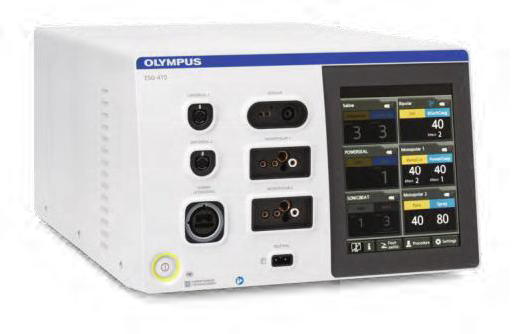
The ESG-410 is a comprehensive electrosurgical platform designed to support a wide range of devices, including Olympus energy device portfolio.
Key Features
· Equipped with Over 20 Output Modes: The output mode can be selected to match the tissue characteristics and surgical procedure. Furthermore, having both voltage-control (constant-voltage) and power-control (constant-power) modes offers meaningful safety–performance trade-offs: voltage-control maintains a set voltage so only the necessary current flows, helping reduce voltage-dependent adverse events (e.g., stray energy1,2) compared with constant-power delivery; power-control maintains target power regardless of tissue impedance, preserving tissue effect even in high- resistance conditions, though the higher peak voltages required warrant caution. In line with FUSE principles—lowest effective power, shortest activation, appropriate contact/pressure1—the ability to switch output strategies by safety needs, tissue, and field conditions is a distinctive advantage of the ESG-410.
· Precise Customization: Fine adjustment of Soft Coagulation “Effect” levels enables tailored tissue coagulation.
Principles and Clinical Advantages of Soft Coagulation
1. Mechanism of Carbonization-Free Hemostasis
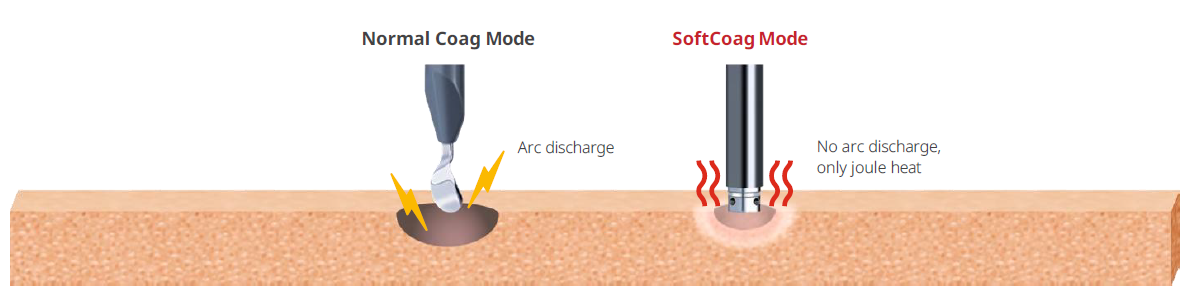
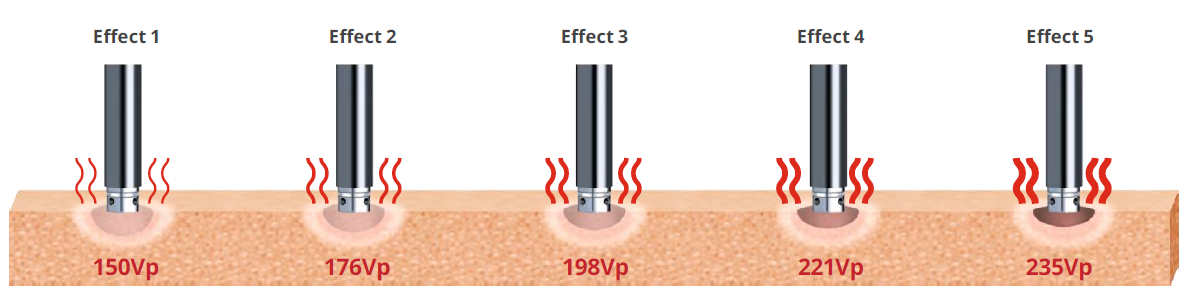
Soft Coagulation is a very-low-voltage mode (typically <200 Vp) that delivers continuous current without electric arc discharge, generating only joule heat and minimizing cutting. Compared with high-voltage Forced Coagulation (arc-dependent rapid desiccation), Soft Coagulation keeps tissue temperature below the carbonization threshold, promoting deep and uniform protein denaturation (white tissue coagulation)3.
2. Clinical Benefits of Soft Coagulation
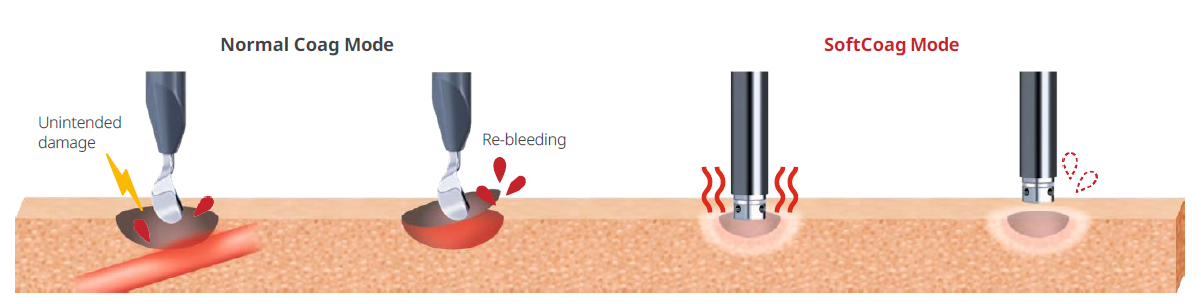
The primary clinical advantage of Soft Coagulation is its ability to achieve reliable hemostasis while minimizing carbonization.
· Reduced Risk of Re-bleeding: Because the tissue does not carbonize or become brittle, the risk of the electrode sticking to the tissue is significantly minimized1,3. This prevents the “peel-off” effect, where the newly formed clot is accidentally removed when the device is retracted.
· Safety Near Vital Structures: The controlled voltage prevents unintended electrical arcing, making it safer for use near deep-seated vessels or delicate nerves where inadvertent damage must be avoided.
· Effect Level Optimization: The ESG-410 allows surgeons to fine-tune the Effect level. A lower Effect provides deeper, slower coagulation, whereas a higher Effect offers shallower but faster results, allowing for precise adaptation to the specific surgical site.
Clinical Application — Synergy with Suction Coagulator

The integration of the Olympus Suction-Irrigation Tube (with Button Electrode WA51138A) and the ESG-410 Soft Coagulation mode—hereafter referred to as the “Suction Coagulator”—enables precise, low-voltage hemostasis without active lavage. Saline is used sparingly (drip-level) only to maintain minimal moisture and contact, not to wash during energy delivery3.
1. Three-Step Workflow for Fine Hemostasis with Suction Coagulator
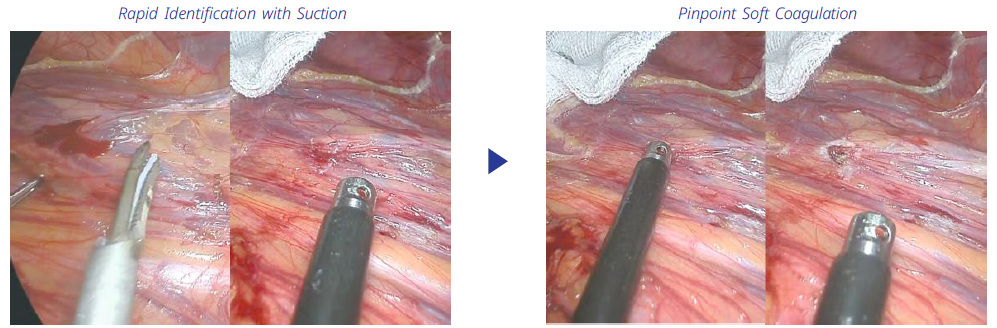
· Rapid Identification with Suction: When bleeding occurs, use suction to clear the field and expose the exact bleeding point. Avoid continuous irrigation at this stage; prioritize a dry, visible target4.
· Pinpoint Soft Coagulation: Apply Soft Coagulation by gentle tip contact directly on the bleeding vessel. The goal is deep protein denaturation without sparking, not superficial coagulation. Use short, intermittent activations and confirm blanching/bleeding cessation.
· Minimal Saline Drip (as needed, not washing): If tissue is too dry or contact is unstable, apply a few drops of saline to maintain a moist interface and stabilize conduction. Avoid pooling: excess fluid reduces current density and thermal effect and can disperse energy away from the target. Suspend the drip during activation if fluid accumulates.
2. Conclusion for Clinical Use
The ” Suction Coagulator “—combining the versatile power control of the ESG-410 with the tactical advantages of the Suction Irrigation Tube—helps minimize surgical stress and enhances patient safety by providing a cleaner, more controlled operative environment.
3. Technical Tips for Optimal Results
Contact is Key: Maintain stable, gentle tip contact and adequate tissue tension.
Effect (voltage ceiling):
Lower Effect: lower peak voltage, less arcing; safer near vital structures.
Higher Effect: higher peak voltage; faster blanching possible but mind voltage-related risks.
Power (W) & Time:
Higher W: faster coagulation progression
Depth is governed mainly by activation time: use short, intermittent bursts for shallow, quick coagulation.
Saline: Minimal drip only and avoid pooling.
4. Clinical Case Studies (Actual Usage)
We will present specific laparoscopic cases featuring video stills and QR codes to view the procedure.
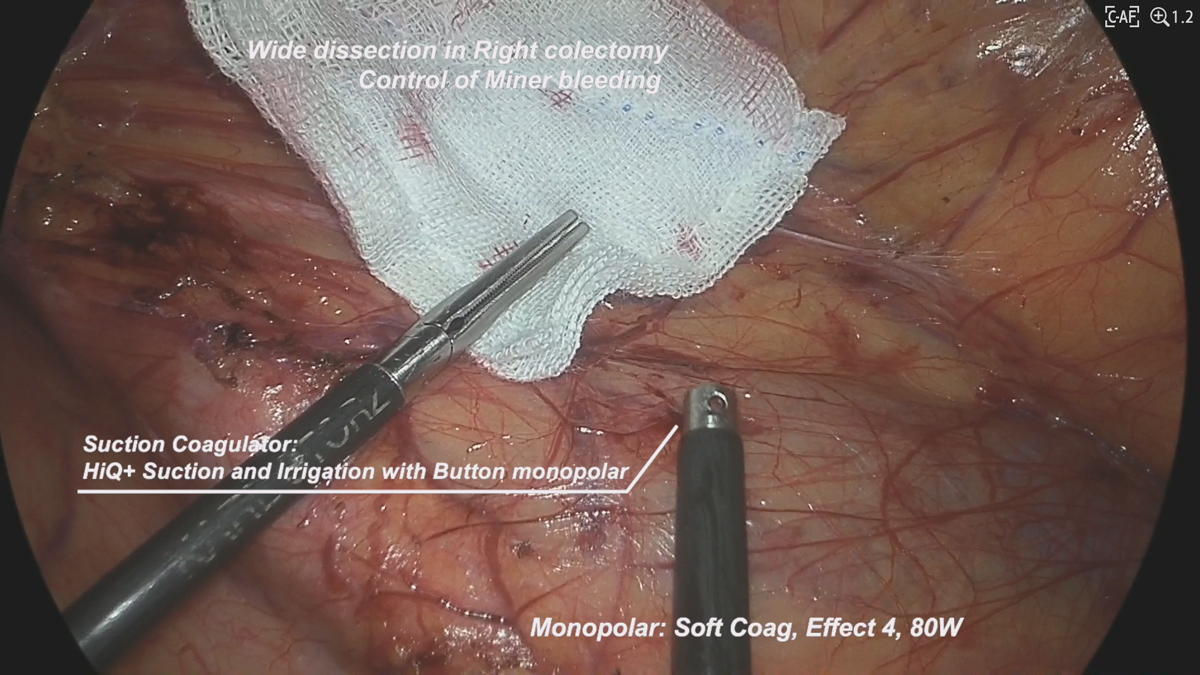
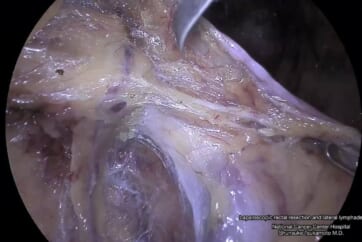
Case 1:
[Wide dissection in laparoscopic right colectomy]
ESG-410 setting: Soft Coag, 80 W, Effect 4
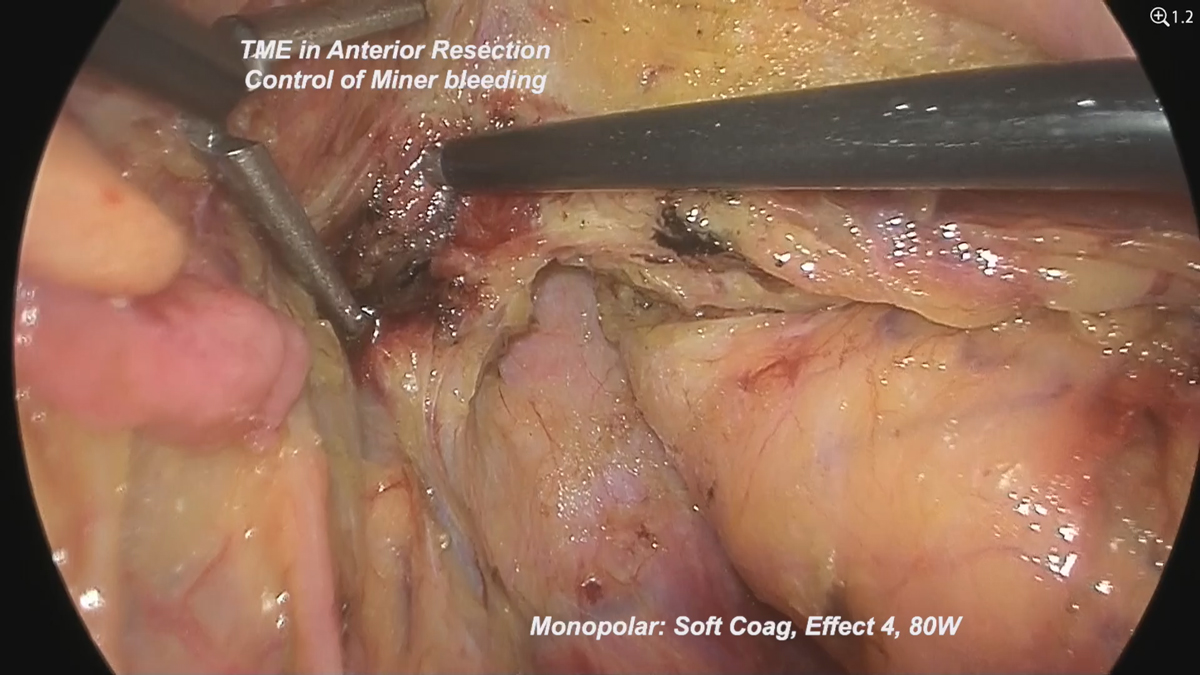
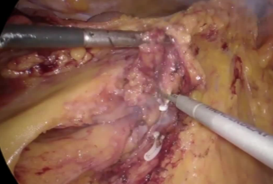
Case 2:
[Control of minor bleeding in laparoscopic low anterior resection]
ESG-410 setting: Soft Coag, 80 W, Effect 4
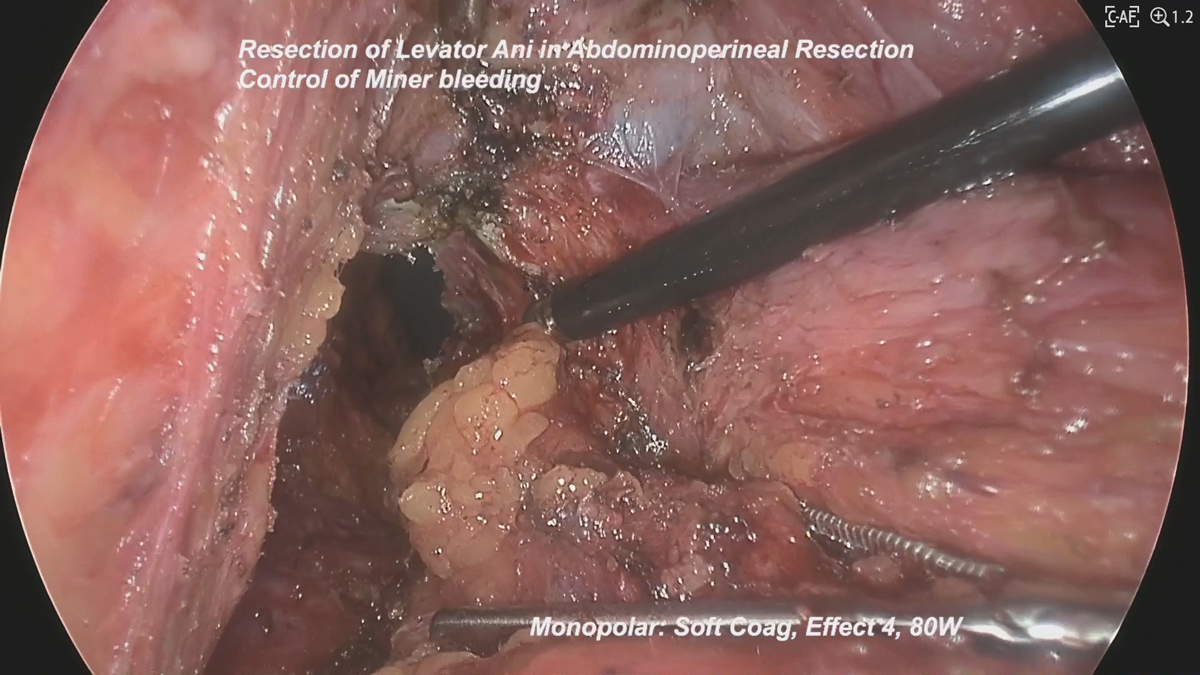
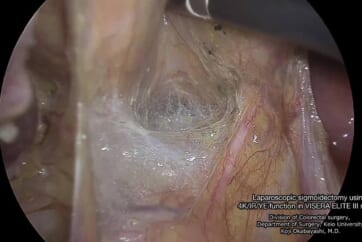
Case 3:
[Hemostasis in laparoscopic abdominoperineal resection]
ESG-410 setting: Soft Coag, 80 W, Effect 4
Reference
1. Feldman L, Fuchshuber P, Jones DB. The SAGES Manual on the Fundamental Use of Surgical Energy (FUSE). New York, NY: Springer Science & Business Media. 2012.
2. Wikiel K, Powlan FJ, Jones TS, et al. Robotic stray energy with constant-voltage versus constant-power regulating electrosurgical generators. Surg Endosc. 2023;37:580–586. doi: 10.1007/s00464-022-09316-5.
3. Watanabe Y, Fuchshuber P, Homma T, et al. An Unmodulated Very-Low-Voltage Electrosurgical Technology Creates Predictable and Ultimate Tissue Coagulation: From Experimental Data to Clinical Use Surg Innov. 2020;27(5):492-498. doi: 10.1177/1553350620904610.
4. Takahashi H, Haraguchi N, Nishimura J, et al. A novel suction/coagulation integrated probe for achieving better hemostasis: development and clinical use. Surg Today. 2018;48(6):649-655.
- Content Type